Getting to know Leila Amaryllis: An in-depth personal interview
Contents
A personal, in-depth interview with the woman behind Inzicht & Harmonie
Who are you when you put all your professional titles aside?
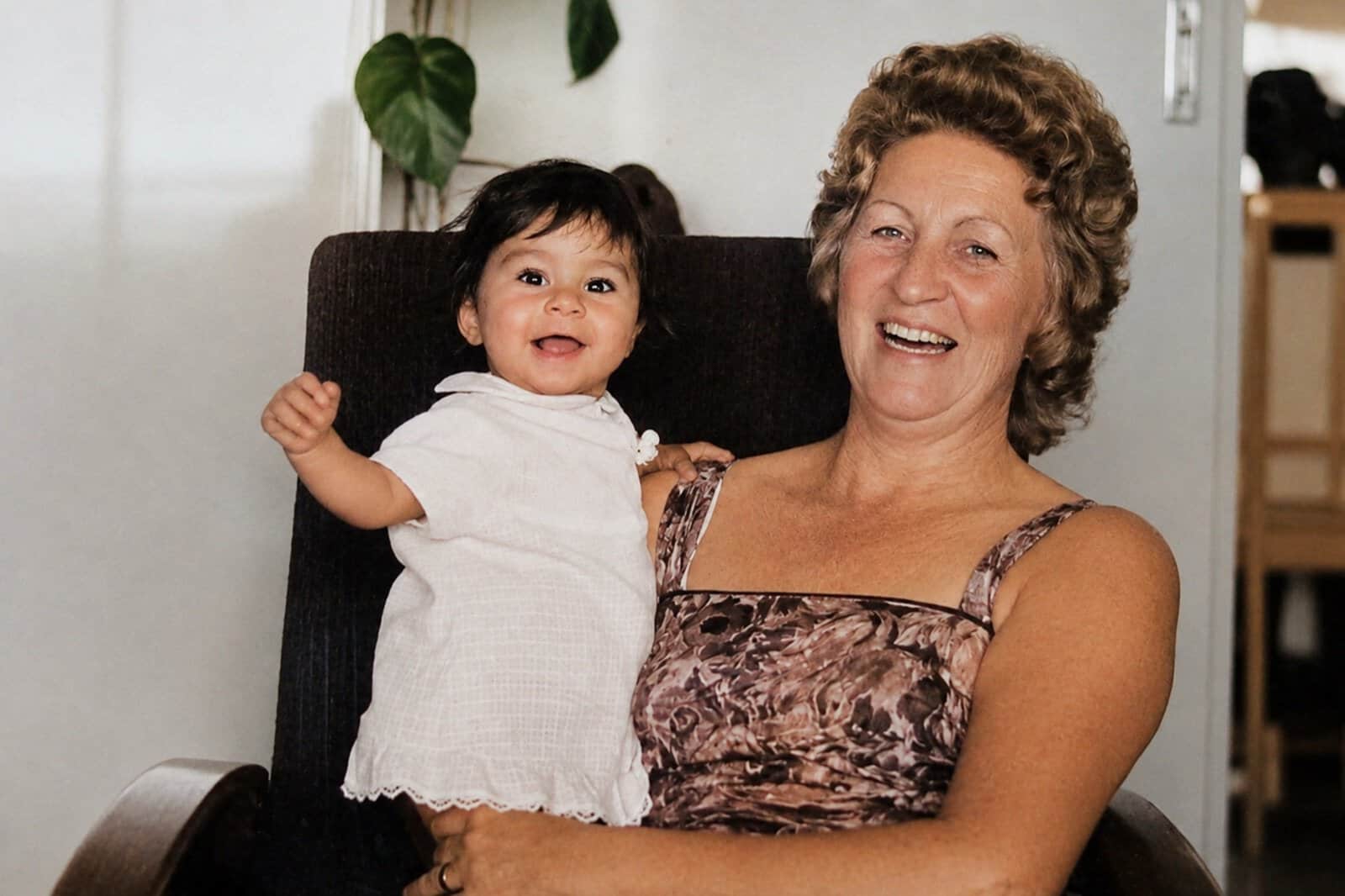
First and foremost, I'm a human being. I'm a very proud mother of two sons, mother-in-law to two lovely daughters-in-law, and grandmother to a much-loved grandson and granddaughter. I love my family and friends deeply. I feel very blessed. I grew up in a family where running your own business was an important part of life.
I'm someone who lives life intensely, who has been through a great deal, seen a great deal and feels deeply connected to what moves people. Life has taught me just how many layers there are to a person, and how much can lie behind a face, a reaction or a decision.
That's why the saying ‘Nothing human is alien to me’ resonates so strongly with me.
I'm never shocked by what someone feels or thinks, what they've done, what they've been through or what they tell me. I don't believe in putting people into boxes or judging them. I'd rather understand what's really going on.
What matters most to you in your relationships with others?
Respect.
Respect is one of the values I hold most dear.
I don't believe people always have to love one another in order to treat each other well. Even when love has faded, or people don't understand one another, respect and honesty can still provide a basis for treating each other with humanity. To me, respect is the foundation of everything good.
Honesty, clarity, warmth, equality and being non-judgemental also matter enormously to me.
Have you always been this way, or has your work taught you to be like this?
Listening carefully, staying calm and continuing to see the person behind a question or situation have always come naturally to me.
Of course, more than 37 years of experience have added a wealth of human stories, circumstances and insights. But this way of seeing people isn't something I had to learn through my profession.
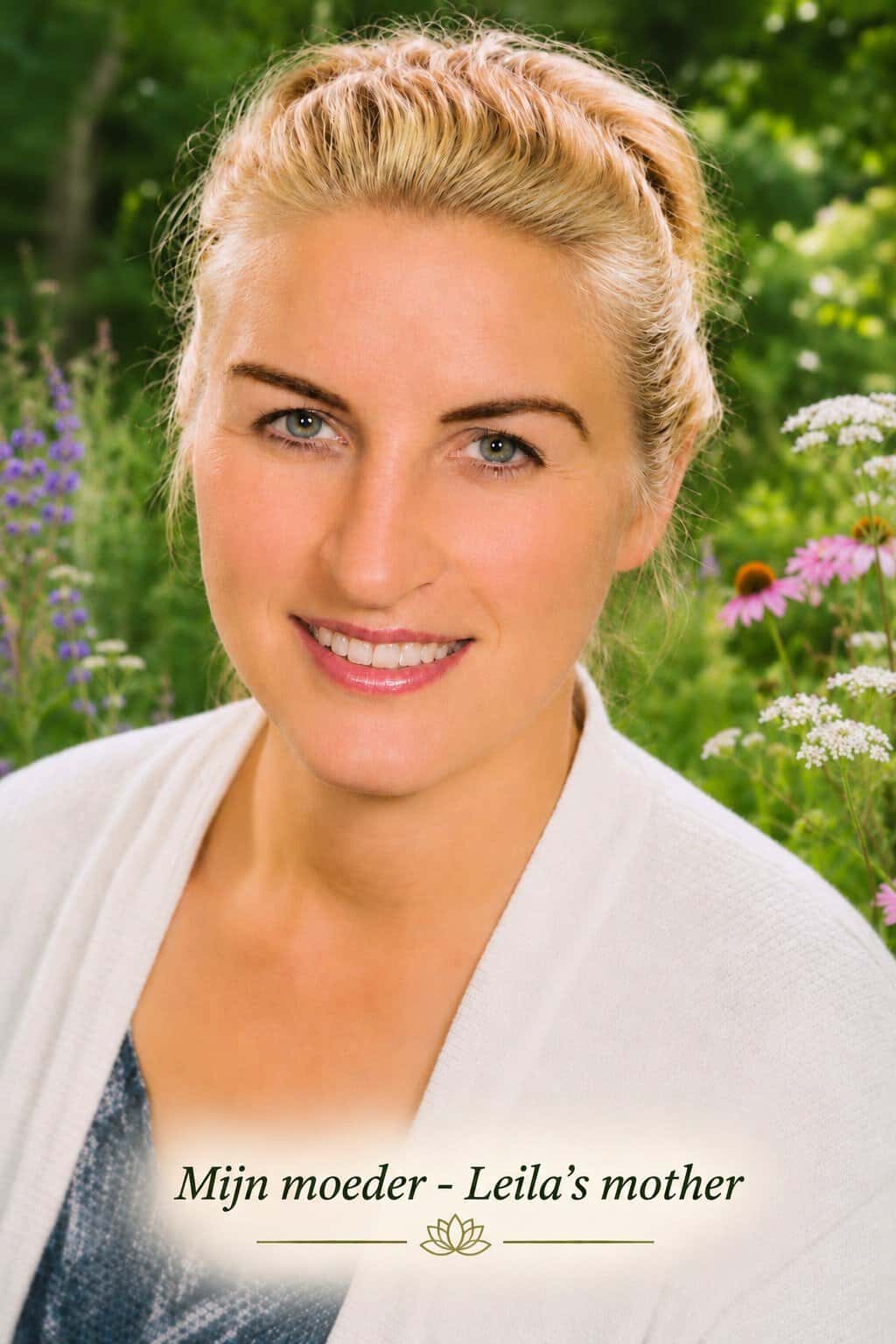
It's part of who I am. My late mother is, without question, my greatest role model. She played an enormous part in shaping who I am today and how I work. I will always be grateful to her for that.
What does honesty mean to you?
To me, honesty is not the same as being harsh.
You can be very clear while remaining gentle and respectful.
For me, honesty means saying what you truly feel and not making something sound better or different simply because the truth may be harder to hear.
That matters in my work, too. If I don't perceive something clearly, I say so.
I believe an honest answer is always more respectful than telling someone what they want to hear.
How do you want people to feel when they come to you?
“A feeling is a feeling. It doesn't need another layer of judgement.”
Above all, I hope they feel safe and at ease.
That they can feel:
- I can be myself here.
- I don't have to make things sound better than they are.
- I don't have to pretend to be stronger than I feel.
- I won't be judged.
- I can say what's really going on.
- Whatever I share here will be treated in confidence.
Sometimes people come to me with things they've barely been able to talk about with anyone else. That is precisely why safety and trust are so important to me.
What does your work mean to you personally?
My work is my greatest passion.
In fact, it feels like much more than a profession to me. I genuinely love what I do.
When someone comes to me carrying sadness, confusion, doubt or a head full of questions, and things begin to become clearer during our time together, that gives me an enormous sense of fulfilment.
When someone can leave feeling:
- I understand what's happening a little better now.
- I can see the situation more clearly again.
- I know how to move forward.
that's exactly why I do this work.
How did you come to do this work?
My gift doesn't feel like something I ever learnt.
I was born with psychic abilities.
Perceiving, sensing and tuning in have always been part of who I am.
Over the course of my life, I've naturally gained a great deal of experience and studied many subjects in depth. But my psychic perceptions didn't begin with a course or formal training. They are a natural part of me.
How much has your own life shaped you?
A great deal.
My life experience is broad, intense and deeply lived. I've come to know many sides of the human experience at close quarters.
- Love.
- Sadness.
- Loss.
- Relationships.
- Family.
- Boundaries.
- Responsibility.
- Difficult choices.
- Having to start again.
- And finding your own way back.
Not all of that needs to be shared publicly on my website.
My past isn't a marketing tool.
What I do think matters is that people know my understanding of difficult life situations isn't purely theoretical.
I also have personal experience of complex post-traumatic stress disorder (C-PTSD). It doesn't need to be prominently mentioned everywhere, but it is part of my life experience and my understanding of the ways people learn to survive.
You've also studied psychology and human behaviour. How do you see that?
Over many years of independent study, I've explored psychology, human behaviour, emotions, beliefs and patterns in considerable depth.
I'm not a formally qualified psychologist, and I don't want to give anyone the wrong impression.
What's more important to me is that people know I've long taken a serious interest in why we feel, think and react the way we do.
My knowledge, my life experience and my natural gift come together very naturally in my work.
How has your cultural background shaped you?
I come from a multicultural background.
I'm half Egyptian and half Scandinavian, and I've also lived in Egypt.
My own experience has shown me just how much culture can influence family life, relationships, expectations, roles, responsibilities and communication.
Two people can genuinely love each other and still see the same situation from completely different perspectives.
That also helps me approach people from different cultural backgrounds, intercultural relationships and family dynamics.
What kinds of people do you enjoy working with?
I don't really have a particular ‘type’ of person in mind.
My clients vary enormously.
- In age.
- In background.
- In culture.
- In profession.
- In stage of life.
- In social position.
- And in how spiritual, or how down-to-earth, they are themselves.
None of that is what matters most to me.
At the end of the day, we're all human.
What can people come to you for?
All sorts of questions. Some people want to ask or say something to a loved one who is no longer here. I then use channelling to seek contact with someone who has died, or with someone who is still alive but feels out of reach. Others come with relationship difficulties, heartbreak or patterns that keep repeating themselves.
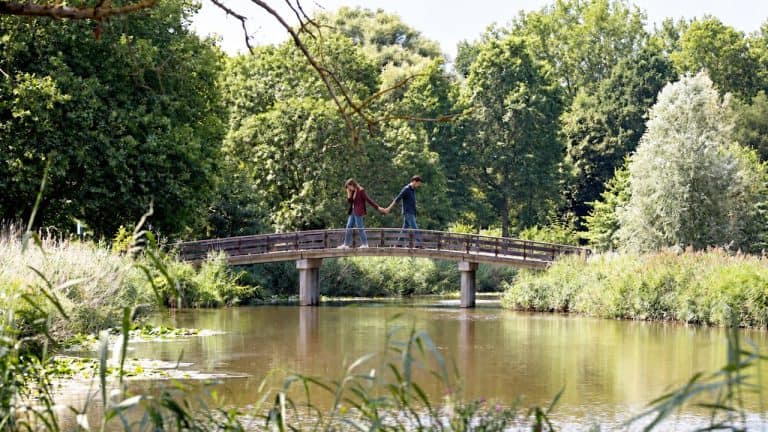
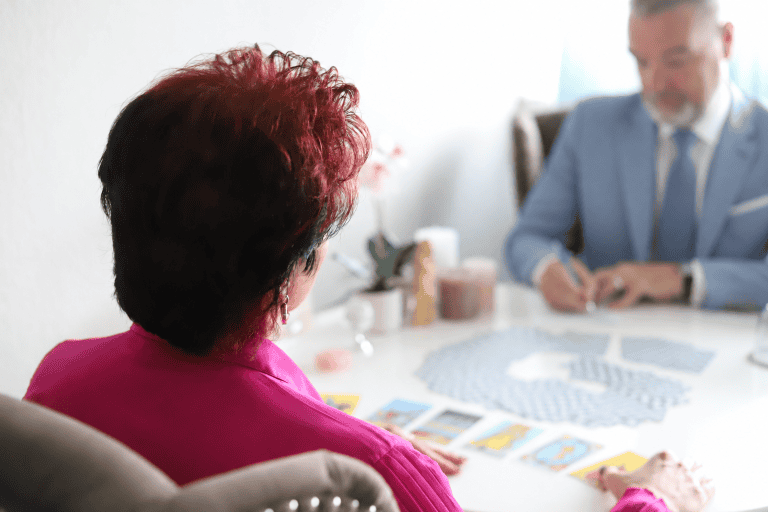
Sometimes I use photo readings and tarot as tools, or we use an individual family constellation to explore what's happening within a family. Those who prefer to be moving can walk with me through the Schollebos during walk-and-talk coaching. And I act as a sounding board for business owners with professional questions.
What do you admire about people?
Their resilience.
People can be deeply hurt and still find their way forward again.
I find it moving when, during a conversation or session, someone reconnects with a part of themselves.
Not because I've done it for them, but because enough clarity has emerged for them to feel it for themselves again.
What moves you when you're guiding people?
When someone has made themselves feel small.
When they've become so accustomed to a situation that they've almost forgotten there could be other possibilities.
Or when they constantly judge themselves for what they feel.
A feeling is a feeling.
It doesn't need another layer of judgement.
I want to help people see themselves and their situation clearly before anything else.
What does equality mean to you?
“The person asking the question matters more to me than the question itself.”
It means I don't place myself above my client.
My perceptions may offer information that someone can't see for themselves at that moment, but that doesn't mean I know better than they do how they should live their life.
- I can stand alongside someone.
- I can reflect things back to them.
- I can help bring things into view.
- I can offer advice.
But it's still their life.
The decision always remains theirs.
Why is it so important to you that people make their own decisions?
Because I never want anyone to feel that another person should be in charge of their life.
I can share information and help someone look at a situation, but ultimately their decisions need to feel right to them, too.
That's why I want people to keep asking themselves:
- What does this mean to me?
- What do I want to do with it?
- What feels right for me?
Why don't you want people to become dependent on you?
Because that would be the exact opposite of what I'm trying to achieve.
I want people to become stronger, clearer and more independent.
Not to reach every new decision and think:
I need to call Leila first.
Many clients find that a single session can already bring a great deal of clarity.
If that's all they need, I think that's wonderful.
A follow-up session is there if someone wants one, not because I believe they need to keep coming back.
What does success look like to you in your work?
When someone feels more at peace.
More able to see the bigger picture.
More clarity.
More confidence.
When something that once seemed terribly complicated begins to make more sense.
And, above all, when someone feels:
I can take it from here.
What does being a confidential adviser mean to you?
It means people are welcome to come to me even without a specific psychic question.
Sometimes what someone needs most is a place where they can finally say something out loud.
- Where they can speak freely.
- Without judgement.
- Without everything having to be solved immediately.
- And with the reassurance that what they share will remain confidential.
My broad life experience plays an important part in this.
What does being a sounding board mean to you?
Sometimes someone already knows a great deal deep down, but their thoughts are all tangled up.
It can help enormously to think things through out loud.
- To look at a choice from several angles.
- To discuss a plan.
- To test an idea.
- Or simply to talk with someone who has no personal stake in the outcome.
As a sounding board, I ask focused questions, reflect back what I notice and help people get to the heart of what really matters.
I don't make the decision for them.
You say you get to the heart of things quickly. What do you mean by that?
It means I usually don't need very long to sense or perceive what a question is really about.
Sometimes someone comes with a long story, while beneath it all there's one central question, need, fear or pattern.
I value clarity.
I don't believe in going round in circles unnecessarily.
But getting to the heart of something quickly doesn't mean rushing anyone.
There can still be plenty of calm and space.
It's about being clear without being harsh.
What is your personal outlook on life?
For me, creation comes from the Source.
I experience the Source as the origin of creation, inseparably connected with unconditional love and light.
That is my own spiritual belief.
I don't need anyone else to believe exactly the same thing.
Everyone is free to find their own path in that respect.
What does the soul mean to you?
When I speak about the soul or the Higher Self, I mean the same thing.
For me, it is the deepest essence of who someone is.
A part that goes beyond personality, behaviour, thoughts or circumstances.
Do you see thinking and the ego as the same thing?
No.
Thoughts can be entirely neutral.
To me, thinking isn't automatically the same as the ego.
I associate the ego more with statements such as:
- I want.
- I must.
- I am.
- I think.
I experience a person as a whole made up of different layers: body, mind, soul or Higher Self, thoughts, ego, consciousness and subconscious mind.
How important is spirituality to you?
It's a natural part of my life and my work.
But I never want to impose spirituality on anyone.
I can share what I experience and how I see things.
The other person is free to decide what, if anything, feels right to them.
I don't feel any need to convince anyone.
What do you absolutely not want to convey?
- That I'm vague or overly mystical.
- That I see myself as above other people.
- That I hold absolute truths.
- That anyone has to keep needing me.
- That I decide how someone should live their life.
- That I can solve everything.
- Or that I make promises about things I can't guarantee.
And what do you want to convey?
- Humanity.
- Warmth.
- Respect.
- Honesty.
- Clarity.
- Depth.
- A grounded approach.
- Experience.
- Safety.
- Equality.
- Confidentiality.
- And that people can come to me with many different aspects of life.
What does ‘Nothing human is alien to me’ really mean to you?
It means people don't have to wonder:
Can I really tell her this?
In my life and work, I've heard and experienced so many different human situations, emotions and stories that I'm not easily shocked by what someone shares with me.
That doesn't mean I consider everything the same or that everything should be approved of.
It means I want to see the person first.
What do you hope people feel when they walk into your practice?
Peace.
That there's time and attention for them.
That they won't be judged.
That they can simply be themselves for a moment.
I've deliberately made my consultation room calm, fresh and free from unnecessary distractions.
I want someone to feel comfortable sitting down, relaxing and thinking:
We can take our time and look at what's on my mind.
Where do you work?
My practice is in Capelle aan den IJssel, right next to Rotterdam.
I see clients in my quiet practice room at home, but I also offer consultations by phone and online.
That means I can work not only with people nearby, but also with clients further afield and internationally.
Sessions are also available in English.
What would you like people to know about you before sharing something vulnerable?
That the person asking a question will always matter more to me than the question itself.
That they don't have to be perfect when they come to me.
That I treat what they share as confidential.
That I'm honest.
That I don't judge.
And that I always try to consider everyone involved in a situation with respect.
How would you like clients to remember you afterwards?
As someone with whom they could be themselves.
Someone who wasn't shocked by their story.
Who didn't judge them.
Who was honest.
Who quickly understood what really mattered.
Who combined warmth with clarity.
And who helped them find the confidence to continue on their own path.
The heart of who Leila Amaryllis is
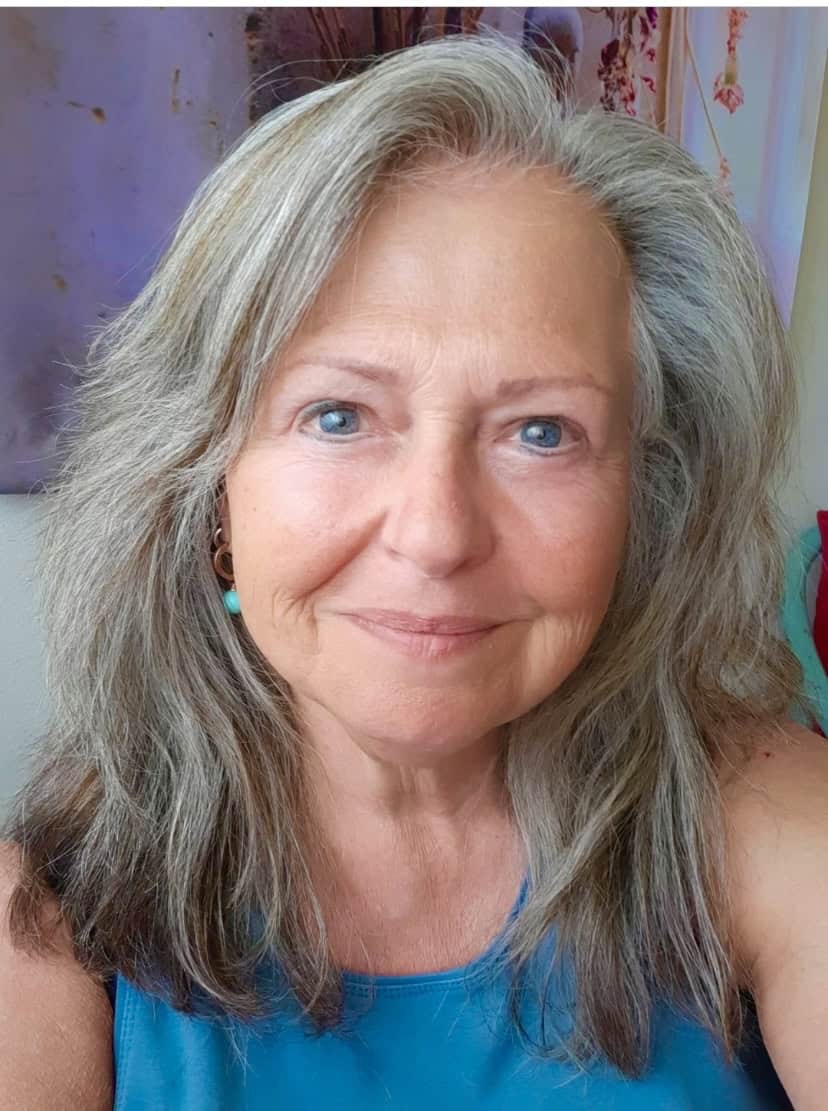
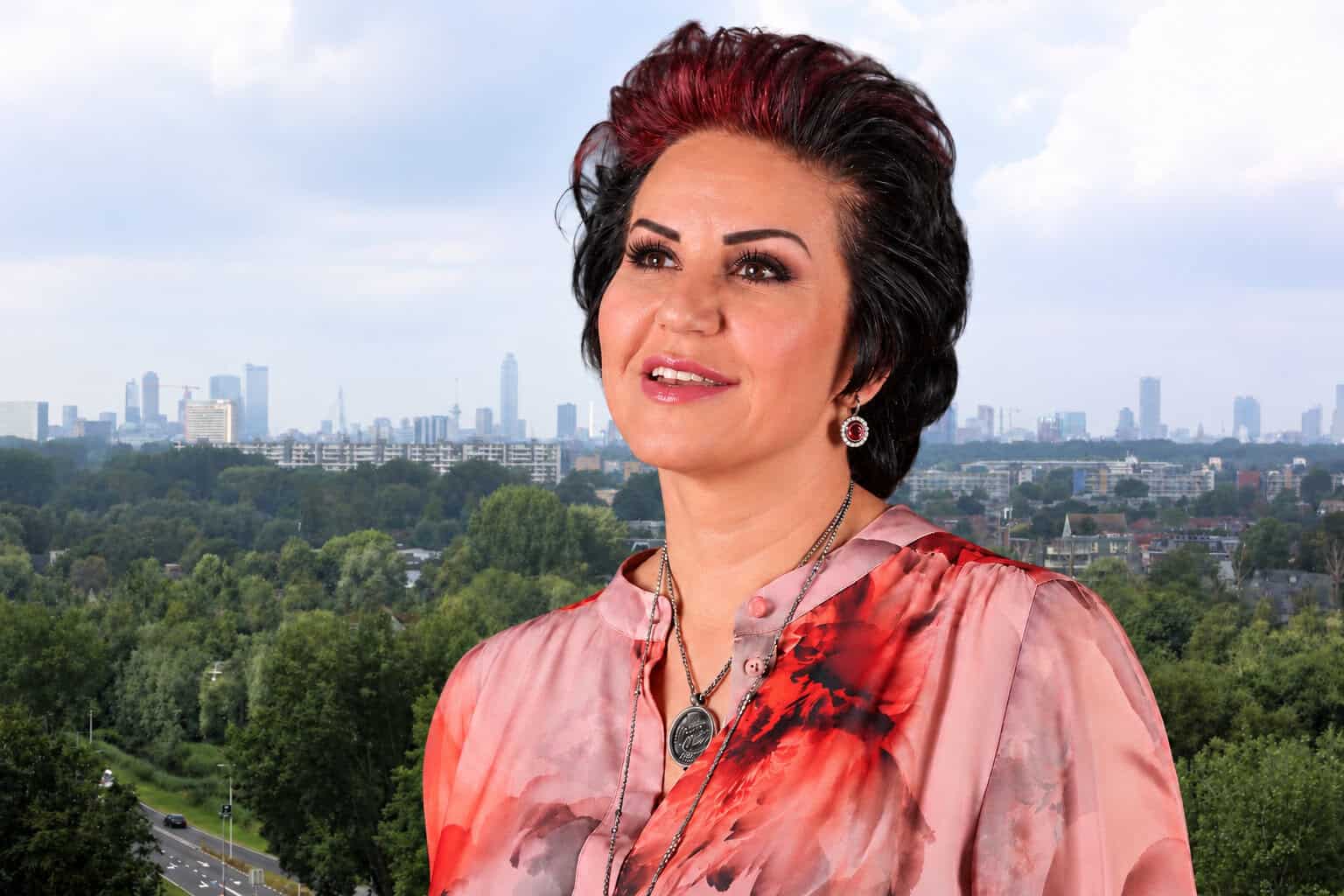
I'm Leila Amaryllis de Vries: born with psychic abilities, a medium, personal development coach, confidential adviser and sounding board with more than 37 years of experience.
But ultimately, none of those titles matters most to me.
What matters most is the person sitting in front of me.
I want people to feel safe, to be themselves and to explore their questions without judgement.
I work with respect, honesty, clarity and equality. I like to get to the heart of things quickly, but always with care for the person and at a pace that feels right for them.
My aim isn't to make people dependent on me.
The best outcome I could hope for is that, after our time together, someone feels:
- I understand what's happening a little better.
- I'm in touch with what matters to me again.
- I trust my own decisions.
- And I'm ready to move forward.
Categories